What to Prepare Before Driving Ehime's Mountain Roads in WinterWinter Tires, Chains, What to Carry, and Choosing a Rental Car
For people driving mountain roads such as Mt. Ishizuchi, the Shikoku Karst and Misaka Pass on National Route 33 between November and March. From official sources, this page covers the difference between winter tires and chains, the chain restriction sign, how the rental car companies at Matsuyama Airport handle winter tires and chains, what to carry in the car, and common winter trouble.
PR: This article has affiliate links to Klook and Amazon Japan at the end.
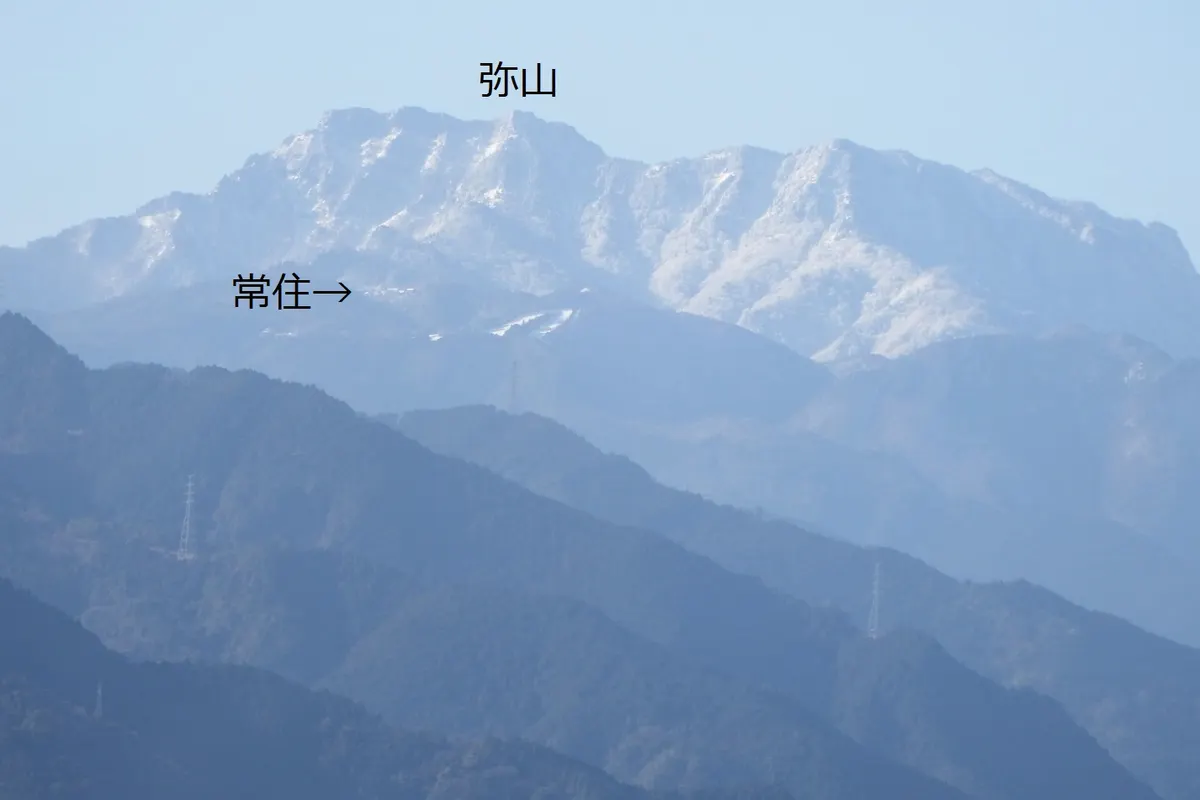
Summary
- The Ehime Prefecture regulations require vehicles to be equipped with chains, snow tires or similar devices on snowy or frozen roads.
- In a chain restriction section, even cars with studless tires cannot pass without fitting chains.
- The Japan Automobile Tyre Manufacturers Association writes not to use winter tires with less than 50% of the new tread depth.
- Budget Matsuyama Airport basically rents cars with normal tires even in winter. Nippon, Times and Heisei do not handle chains.
- In JAF's call-outs over the New Year holidays, a flat battery was the most common reason on ordinary roads.
Even in Ehime, Mountain Roads Get Snow and Ice in Winter
The page of the Ehime Prefecture Road Maintenance Division says this about roads in winter.
冬場の道路は、積雪や路面温度の低下による路面凍結が起こる箇所があります。 特に山間部の積雪・凍結や橋梁部の凍結には注意が必要です。道路情報の入手で安全な通行を心がけましょう。
Translation: “On roads in winter, there are places where the road surface freezes because of snow or a drop in road surface temperature. Take special care with snow and ice in mountain areas and with ice on bridges. Get road information and drive safely.”
Source: 愛媛県道路情報に関するリンク - 愛媛県庁公式ホームページ(道路維持課) (checked on October 17, 2026)
The same page shows photos of cars lined up in heavy snow near Misaka Pass (三坂峠) on National Route 33. The date of the photos is not given.
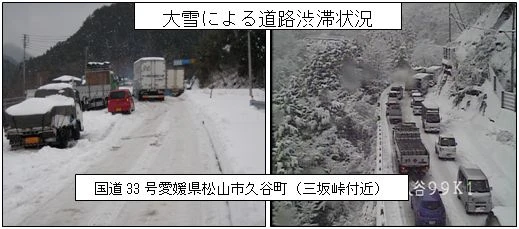
This article sums up what to prepare before you leave. The winter closure periods, a detailed explanation of chain restrictions, and the places that freeze easily are in Before Driving Ehime’s Mountain Roads in Winter: Winter Closures, Chain Restrictions and Winter Tire Rules.
Roads Where You Should Think About Winter Tires and Chains
If your trip only goes through flat urban areas or along the coast, you will not use the roads in this table. Please read it if you plan to go through Mt. Ishizuchi, the Shikoku Karst, Kumakogen Town or the mountain passes of Nanyo (southern Ehime).
| Road | What the official pages say |
|---|---|
| National Route 33 (near Misaka Pass) | An Ehime Prefecture page has photos of a traffic jam in heavy snow. A Matsuyama River and National Highway Office page has a photo of an example of cars stranded on a snowy road in the section at Kutani, Matsuyama City |
| Ishizuchi Skyline (石鎚スカイライン) (Prefectural Road 12) | December 1 to March 31 of the next year is the winter closure period, and you cannot drive it |
| Prefectural Road 12 (to Sanroku-Shimotani Station (山麓下谷駅) of the Ishizuchi Ropeway) | On January 3, 2026, Ishizuchi Ski Area said “There is snow on the road from around Kurose Dam.” |
| Prefectural Road 383 (Shikoku Karst Park Traversing Line) | Usually closed in winter, when snow and freezing are expected |
| National Route 56 (Tosaka Pass (鳥坂峠)) | In the MLIT list of chain restriction places, this section is the one place listed for Ehime |
The numbers match the list below and are not a driving order. Tap a number on the map, or "Navigate in Google Maps" in the list, to start directions to that place.
Point locations: © OpenStreetMap contributors (ODbL), GSI place name search
- Misaka Pass (National Route 33): An Ehime Prefecture page shows photos of cars lined up in heavy snow on National Route 33 at Kutani-machi, Matsuyama City (near Misaka Pass). The date of the photos is not given.Navigate in Google Maps
- Kanmon gate of the Ishizuchi Skyline: In the table of gate opening and closing times of the Ishizuchi Skyline, December 1 to March 31 of the next year is the winter closure period.Navigate in Google Maps
- Sanroku-Shimotani Station, Ishizuchi Ropeway: As of 8:00 on January 3, 2026, Ishizuchi Ski Area said there was snow on the road from around Kurose Dam, and asked people coming in the morning to prepare studless tires, chains and the like.Navigate in Google Maps
- Tosaka Pass (National Route 56): Tosaka Pass on National Route 56 (Uwa, Seiyo City, to Kitatada, Ozu City, length 7.0 km). In the MLIT list of chain restriction places, it is the one place listed for Ehime.Navigate in Google Maps
- Mezuru-daira (Shikoku Karst): Prefectural Road 383, the Shikoku Karst Park Traversing Line, is usually closed in winter, when snow and freezing are expected. In fiscal 2025, from 10:00 on December 5 to 11:00 on March 18.Navigate in Google Maps
The notice of Ishizuchi Ski Area (石鎚スキー場) on January 3, 2026, said this.
黒瀬ダム付近より道路に積雪があります。 除雪作業を行っておりますが、午前中来られる方はスタッドレスタイヤ・チェーン等をご準備ください。
Translation: “There is snow on the road from around Kurose Dam. We are clearing the snow, but if you are coming in the morning, please prepare studless tires, chains and the like.”
Source: 積雪・道路情報(R8.1.3) | 石鎚スキー場 (スキー&スノーボード) (checked on October 17, 2026)
The MLIT Matsuyama River and National Highway Office asks drivers on roads that freeze easily to do this.
冬季に凍りやすい箇所(道路)を走行する自動車には、常にチェーンを搭載するか、 あらかじめスタッドレスタイヤ等にはきかえましょう。
Translation: “Vehicles driving in places (roads) that freeze easily in winter should always carry chains, or change to studless tires or the like in advance.”
Source: 松山河川国道事務所/道について/凍結危険箇所マップ (checked on October 17, 2026)
The Rules: The Prefecture’s Regulations and the Chain Restriction Sign
Article 12 of the Ehime Prefecture Road Traffic Regulations
Article 12 of the Ehime Prefecture Road Traffic Regulations lists the matters that drivers must observe. This is item 2.
(2) 積雪し、又は凍結している道路において自動車を運転するときは、タイヤチェーン、スノータイヤ等すべり止めに効果のある装置を備え付けること。
Translation: “(2) When driving a motor vehicle on a road that is covered with snow or frozen, equip the vehicle with a device effective in preventing slipping, such as tire chains or snow tires.”
Source: 愛媛県道路交通規則 (checked on October 17, 2026)
The page of the MLIT Shikoku Regional Development Bureau says that for violations of these prefectural rules, “反則金が適用される場合があります。(大型:7千円、普通:6千円)” (a fine may apply; large vehicles: 7,000 yen, regular: 6,000 yen). How to read the provision is in the article Winter Closures, Chain Restrictions and Winter Tire Rules.
In a Chain Restriction Section, You Need Chains Even With Studless Tires
A chain restriction is carried out only in heavy snow. The MLIT page says this.
大雪特別警報や大雪に対する緊急発表が行われるような異例の降雪があるときに行います。
Translation: “It is carried out when there is unusual snowfall, such as when a heavy snow emergency warning or an emergency announcement about heavy snow is issued.”
そのため、今回のチェーン規制では、スタッドレスタイヤを着けていても、タイヤチェーンをしていない自動車はチェーン規制中に通ることはできません。
Translation: “For this reason, under this chain restriction, even a car with studless tires cannot pass during the chain restriction if it is not fitted with tire chains.”
Source: 道路:雪防災 - 国土交通省 (checked on October 17, 2026)
The same page says that chains are checked before the restricted section. For chains, “putting tire chains on the drive wheels is the basic rule” (「駆動輪にタイヤチェーンを着けることが基本」).
Along with chain restrictions, the following regulatory sign was newly set up on December 14, 2018. The name of the sign is “No entry for vehicles without tire chains” (タイヤチェーンを取り付けていない車両通行止め).
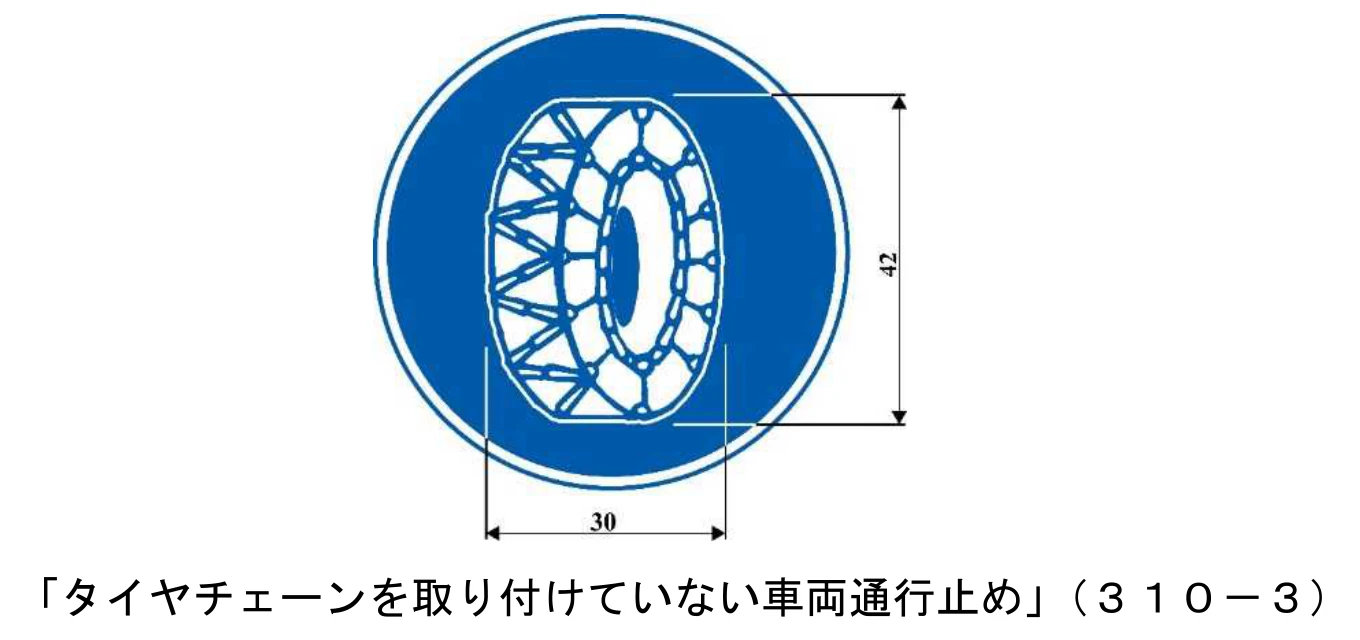
On expressways, there is also a “winter tire restriction,” separate from the chain restriction. The NEXCO West Japan page says that during a winter tire restriction, cars without winter tires or an anti-slip device such as tire chains cannot drive.
The Difference Between Winter Tires and Chains
Types of Winter Tires
The NEXCO West Japan page explains winter tires like this.
| Type | NEXCO West Japan’s explanation | How to tell / how to fit |
|---|---|---|
| Studless tires | Rubber of a special mix that does not easily harden even at low temperatures of 0°C or below. The shape of the grooves and the cuts are improved | Fit tires with the studless marking (domestic marking) on the side on all wheels |
| Snow tires | Tires with large bumps on the surface and wide, deep grooves so they can grip snow | The word SNOW is on the side. Fit on all wheels |
| All-season tires | Tires meant for use in light, flurrying snow, where the tire can still partly touch the road surface | On expressways in winter, fit tires with the snowflake mark (international marking) on all wheels |
The side of a winter tire (studless tire or snow tire) has the letters STUDLESS or SNOW. When you pick up a rental car, you can tell by looking at the side of the tires.
On the difference from normal tires (summer tires), a figure of the Japan Automobile Tyre Manufacturers Association (JATMA) shows this: if the stopping distance of studless tires is 100, normal tires take 160 on snowy roads and 156 on frozen roads (a test on a tire maker’s test course, stopping from 40 km/h on snowy roads and from 25 km/h on frozen roads). In a JAF test too, normal tires took about 1.7 times as long to stop as studless tires on packed snow, and about 1.8 times as long as with chains on ice.
Check How Worn the Grooves of Winter Tires Are
JATMA writes this about the grooves of winter tires.
積雪路及び凍結路走行の場合は、冬用タイヤの残り溝深さが新品時の50%以上あることを確認してください。 (接地部にプラットホームが設けられているタイヤの場合は、これが露出しているか否かで判断して下さい。)溝深さが50%未満のタイヤは冬用タイヤとしては使用しないでください。
Translation: “When driving on snowy or frozen roads, check that the remaining groove depth of the winter tires is 50% or more of the depth when new. (For tires with a platform in the tread, judge by whether it is showing.) Do not use tires with a groove depth of less than 50% as winter tires.”
Source: 冬道走行とタイヤ | タイヤとユーザー| 一般社団法人 日本自動車タイヤ協会 JATMA (checked on October 17, 2026)
NEXCO West Japan also asks drivers to check the condition of winter tires, such as how worn the grooves are. If you come from outside the prefecture in your own car, look at the grooves of your winter tires before you leave.
Types of Chains
The MLIT chain restriction page divides tire chains into 3 types.
| Type | MLIT’s explanation |
|---|---|
| Metal chain type | Products made of metal chains or wire |
| Urethane and rubber chain type | Products made of resin such as rubber |
| Cloth cover type | Products made of special fibers such as aramid |
The same page says that, for passing during a chain restriction, chains sold at car supply shops and the like are fine. But “the type that sprays on a chemical, like a spray” (「スプレーのように薬剤を吹き付けるタイプのもの」) cannot pass during a chain restriction.
JATMA gives the speed with chains fitted, on snowy and frozen roads, as 30 km/h or less for metal chains and 50 km/h or less for non-metal chains. About choosing and fitting chains, JATMA also writes this.
タイヤにチェーンを装着して、積雪又は凍結していない道路を走行すると、タイヤ、タイヤチェーン及び車両を損傷したり、スリップするおそれがあるので避けてください。 タイヤチェーンは、タイヤサイズに適合するサイズのものを駆動輪又は自動車製作者が指定する位置のタイヤに装着してください
Translation: “Avoid driving with chains on the tires on roads that are not snowy or frozen, because it may damage the tires, the tire chains and the vehicle, or cause slipping. Fit tire chains of a size that matches the tire size on the drive wheels or on the tires in the positions the vehicle maker specifies.”
Source: 冬道走行とタイヤ | タイヤとユーザー| 一般社団法人 日本自動車タイヤ協会 JATMA (checked on October 17, 2026)
Get chains that match your car’s tire size. The size is written on the side of the tire.
Try Fitting Them Once Before You Leave
The page of the Shikoku Regional Development Bureau asks this about fitting chains.
タイヤチェーンの取り付けは難しそうにみえますが、やってみると簡単です。 動画等で取り付け方を事前にご確認いただき、冬本番を迎える前にご準備をお願いします。
Translation: “Fitting tire chains looks difficult, but it is easy once you try. Please check how to fit them in videos and the like in advance, and get ready before winter really starts.”
Source: 冬期は事前の冬用タイヤ・チェーンの装着携行をお願いします|国土交通省四国地方整備局 (checked on October 17, 2026)
NEXCO West Japan also writes, “チェーンの付け方も事前に確認してください” (also check how to fit chains in advance). Before the snow comes, try fitting them once on your own car.
Can You Choose Winter Tires or Chains on a Rental Car?
The Matsuyama Airport page lists 7 companies: Heisei Rent-a-Car, ORIX Rent a Car, Budget Rent a Car, Toyota Rent a Car, Nippon Rent-A-Car, Nissan Rent a Car and Times Car. We checked how each company handles winter tires and chains on its official pages.
| Company | Winter tires (studless) | Chains |
|---|---|---|
| Budget Rent a Car Matsuyama Airport | The shop page says it basically rents cars with normal tires even in winter. In the company-wide table, Ehime shops handle them, they are not standard on all classes, and the paid option is by phone booking only (note ※1) | Not rented at the shop. The company does not rent them anywhere |
| Toyota Rent a Car | No Ehime shop in the list of shops with standard equipment. The option is 2,200 yen (including 10% tax) up to 24 hours for passenger car and van classes | The fee differs by shop. Some shops do not have them |
| Nippon Rent-A-Car | Ehime is not in the standard-equipment areas. The option is 2,200 yen per day for passenger cars and vans (up to 10 days). On the official site and app, it can be chosen for reservations departing October to May of the next year. Limited number | Not handled anywhere in the country |
| Times Car Rental | Ehime is not in the standard-equipment areas. You can choose it if “studless” appears in the equipment when you book | Not handled |
| ORIX Rent a Car | Cannot be chosen as an option. Choose a car marked “studless” when you book. The price list says from 2,640 yen per 24 hours | Only some shops. From 3,300 yen per rental. Ask the shop for details |
| Heisei Rent-a-Car | A “car with studless tires” is 3,300 yen to 4,400 yen per day, depending on the car class. This page does not say whether you can choose it at the Matsuyama Airport shop | Chains are not rented |
| Nissan Rent a Car | Can be rented as an option (equipment). Some shops do not handle them, and the number is limited. The price list (Kei/Compact column) says 2,200 yen for 1 day for a set of 4 tires | Can be rented as an option (equipment). Some shops do not handle them, and the number is limited |
The page of Budget Rent a Car Matsuyama Airport says this.
当店ではタイヤチェーンの貸出はございません。 当店では冬季も基本的にノーマルタイヤでの貸出となります。
Translation: “This shop does not rent tire chains. In winter too, this shop basically rents cars with normal tires.”
Source: 松山空港店のレンタカー予約|バジェットレンタカー【公式】 (checked on October 17, 2026)
In the company-wide guide to studless tires and chains of Budget Rent a Car, the Ehime row shows “○” for handling studless tires, “×” for standard equipment on all classes, and “※1 電話予約のみ” (phone booking only) for the paid option. The note says that at shops in Shizuoka, Okayama and the Shikoku area, the paid studless tire option is accepted only by phone or in-store booking. The planned period for Shikoku is November to April (as of October 2026). The page says the company does not rent chains.
The FAQ of Nissan Rent a Car answers like this.
スタッドレスタイヤ及びタイヤチェーンはオプション(備品)としてレンタルが可能です。 但し、取り扱いの無い店舗や数に限りがあり、ご希望に添えない場合があります。
Translation: “Studless tires and tire chains can be rented as options (equipment). However, some shops do not handle them and the number is limited, so we may not be able to meet your request.”
Source: FAQ | 日産レンタカー (checked on October 17, 2026)
The Matsuyama Airport shop of Nissan Rent a Car is an unstaffed shop only for people who booked on partner sites of other companies. Its shop page says nothing about winter tires or chains.
Nippon Rent-A-Car writes this about chains.
◆ タイヤチェーンオプションは、全国でお取り扱いがございません。チェーンが必要な場合は、お客さまご自身でご用意をお願いいたします。
Translation: “◆ The tire chain option is not handled anywhere in the country. If you need chains, please prepare them yourself.”
Source: オプション|ニッポンレンタカー (checked on October 17, 2026)
The ORIX Rent a Car FAQ says that at shops without chains, “we will ask you not to drive through restricted sections” (「規制区間を通行されないようご案内させていただきます」).
In the table, the Toyota, Nippon, Times, ORIX, Heisei and Nissan entries and Budget’s company-wide table are each company’s general guidance. On the Matsuyama Airport shop pages of Toyota, Nippon, Times, ORIX, Heisei and Nissan, nothing about winter tires was found. The prices are what the pages showed on October 17, 2026, and they may change. JAF also writes to check studless tires on a rental car when you book. If you plan to drive mountain roads, ask the shop before you book.
How to rent and the opening hours are in What to know before renting a car at Matsuyama Airport.
What to Carry in the Car
JAF’s List
JAF writes this about what to bring before driving on snowy roads.
持ち物としてはスタッドレスタイヤを装着していたとしても、タイヤチェーンとジャッキは必須です。また、スタック(立ち往生)したときのために、けん引ロープや砂も積んでおくと心強いでしょう。
Translation: “As for things to bring, tire chains and a jack are essential even if you have studless tires on. It is also reassuring to carry a tow rope and sand in case you get stuck (stranded).”
Source: 雪道を走る前に準備しておきたいものとは? | JAF クルマ何でも質問箱 (checked on October 17, 2026)
Here is the list on the same page, sorted by purpose.
| Purpose | Items in JAF’s list |
|---|---|
| Always prepare | Tire chains (matching the tire size), jack |
| Fitting chains and working outside | Work gloves, rubber boots, flashlight |
| When you get stuck | Shovel, sand, tow rope, booster cables |
| Frost and ice on the windows | Scraper, de-icer spray |
| Waiting inside the car | Blanket |
About the jack, JAF writes, “自分のクルマにジャッキが搭載されているのか、確認しておきましょう” (check whether your car has a jack). With a rental car too, when you pick it up, look at where the jack and the spare tire (or puncture repair kit) are.
JAF also writes that normal washer fluid can freeze, and to change it to a type for cold regions.
Carry Plenty of Fuel
The page of the Matsuyama River and National Highway Office says this about winter driving.
冬場の走行では事故車などで思わぬ渋滞に遭遇する事があります。 ガソリンの補充は充分に。
Translation: “When driving in winter, you may run into unexpected traffic jams because of cars in accidents and the like. Fill up with plenty of gasoline.”
Source: 松山河川国道事務所/道について/凍結危険箇所マップ (checked on October 17, 2026)
In their heavy snow announcement of December 2, 2025, MLIT and the Japan Meteorological Agency asked drivers to do the following. The announcement was about heavy snow mainly on the Sea of Japan side, and did not name Ehime Prefecture.
やむを得ず自動車を運転する場合は、ドライバーの皆様には、冬用タイヤの装着、チェーンの装着方法の事前確認・携行及び早めの装着の徹底、スコップや砂等の冬用装備の携行をお願いします。
Translation: “If you have no choice but to drive, we ask all drivers to fit winter tires, to check in advance how to fit chains, carry them and be sure to fit them early, and to carry winter equipment such as a shovel and sand.”
Source: (大雪に対する国土交通省発表、令和7年12月2日、国土交通省・気象庁、PDF) (checked on October 17, 2026)
Carbon Monoxide When You Are Stopped in Snow
JAF writes this about being stuck in heavy snow.
マフラーの排気口が雪でふさがれると一酸化炭素中毒の危険がともなう。 救援を待つ間に、排気ガスの逃げ道だけでも除雪を行う。
Translation: “If the exhaust outlet of the muffler is blocked by snow, there is a danger of carbon monoxide poisoning. While waiting for help, clear the snow at least so the exhaust gas has a way out.”
Source: 雪道・アイスバーンでの運転の注意点 | JAF (checked on October 17, 2026)
A shovel can also be used to clear this snow.
Common Winter Trouble: JAF’s Call-Out Reasons
JAF publishes the reasons for its road service call-outs over the New Year holidays. The nationwide totals for December 27, 2025, to January 5, 2026 (cars and motorcycles combined) are as follows.
| Rank | Ordinary roads | Expressways |
|---|---|---|
| 1st | Over-discharged battery: 35,564 (42.48%) | Tire puncture, burst or low air pressure: 611 (30.75%) |
| 2nd | Tire puncture, burst or low air pressure: 11,722 (14.00%) | Accidents: 208 (10.47%) |
| 3rd | Damaged or worn-out battery: 9,263 (11.06%) | Out of fuel: 184 (9.26%) |
On expressways, there were also 32 “tire chain” call-outs (1.61%). The 4th on ordinary roads was “wheel off the road or fallen in” (落輪・落込), with 4,021 (4.80%). Figures for Ehime or Shikoku alone, and figures for the whole winter from November to March, were not found.
About batteries, JAF explains wear in winter like this.
さらに冬場はワイパーやヒーターなどの連続稼働などによって、バッテリーの消耗が激しくなりがちですので、不測の事態に備え、ブースターケーブルも用意しておくとよいでしょう。
Translation: “In addition, in winter the battery tends to wear down quickly because of continuous use of the wipers, heater and so on, so it is a good idea to also have booster cables ready in case of the unexpected.”
Source: 雪道を走る前に準備しておきたいものとは? | JAF クルマ何でも質問箱 (checked on October 17, 2026)
Another JAF page says that working a battery hard in summer can also cause trouble in winter. If you come in your own car, check the battery and the tire air pressure before you leave.
There is an example of call-out requests increasing on days with snow. In JAF data shown on a JATMA page, there were 1,517 requests for help in the 3 days from February 8 to 10, 2026, when snow fell in the Chugoku area. This was 128% of the 3 days of the week before (1,183).
Who to contact if you get stuck is in What to do and who to contact if you have an accident, a breakdown, or a road problem in Ehime.
Pages to Check Before You Leave
On days you head for mountain roads in winter, look at the road conditions before you leave.
- Live cameras in the prefecture and the pages of the road managers that post closure notices: “Official Pages and Live Cameras to Check Before You Leave” in Before Driving Ehime’s Mountain Roads in Winter
- The overall picture of the organizations that publish road information: Where to check road information in Ehime before you leave
Road and camera information is not for looking at while driving. Look at it before you leave, or have a passenger look at it.
Not stated in the listed sources
- Whether the Matsuyama Airport shops of Toyota, Nippon, ORIX, Times, Heisei and Nissan will have cars with studless tires this winter. Whether you can rent chains at the Nissan Matsuyama Airport shop.
- The studless tire price of Nissan Rent a Car for cars other than Kei/Compact.
- Winter driving advice that Ehime Prefecture or the Ehime Prefectural Police will issue this winter (2026-27).
- JAF call-out reason figures for Ehime or Shikoku alone.
About This Article
The pages listed here were opened and checked on October 17, 2026. Rental car prices and handling change by season and by shop. Please follow the signs on site and the latest guidance of the road managers and rental car companies.
Sources
- 愛媛県道路交通規則 (retrieved October 17, 2026)
- 冬期は事前の冬用タイヤ・チェーンの装着携行をお願いします|国土交通省四国地方整備局 (retrieved October 17, 2026)
- 道路:雪防災 - 国土交通省 (retrieved October 17, 2026)
- 報道発表資料:道路標識、区画線及び道路標示に関する命令の一部を改正する命令の公布について~チェーン規制に関連する改正を行います~ - 国土交通省 (retrieved October 17, 2026)
- (道路標識、区画線及び道路標示に関する命令の一部を改正する命令について、国土交通省の報道発表の別紙、PDF) (retrieved October 17, 2026)
- 冬用タイヤ | NEXCO西日本 (retrieved October 17, 2026)
- 冬の高速道路の安全・安心について | NEXCO西日本 (retrieved October 17, 2026)
- 冬道走行とタイヤ | タイヤとユーザー| 一般社団法人 日本自動車タイヤ協会 JATMA (retrieved October 17, 2026)
- 冬用タイヤの必要性 | タイヤとユーザー | 一般社団法人 日本自動車タイヤ協会 JATMA (retrieved October 17, 2026)
- 昨年末年始、JAF出動は約10秒に1件!~年末年始のクルマ移動は事前点検と慎重な判断を~ | JAF (retrieved October 17, 2026)
- 雪道を走る前に準備しておきたいものとは? | JAF クルマ何でも質問箱 (retrieved October 17, 2026)
- 雪道・アイスバーンでの運転の注意点 | JAF (retrieved October 17, 2026)
- よくあるロードサービス出動理由 | JAF (retrieved October 17, 2026)
- (大雪に対する国土交通省発表、令和7年12月2日、国土交通省・気象庁、PDF) (retrieved October 17, 2026)
- 松山河川国道事務所/道について/凍結危険箇所マップ (retrieved October 17, 2026)
- 愛媛県道路情報に関するリンク - 愛媛県庁公式ホームページ(道路維持課) (retrieved October 17, 2026)
- 石鎚スカイラインについて - 愛媛県庁公式ホームページ(久万高原土木事務所) (retrieved October 17, 2026)
- 一般県道383号四国カルスト公園縦断線(冬期閉鎖)について - 愛媛県庁公式ホームページ(西予土木事務所) (retrieved October 17, 2026)
- 積雪・道路情報(R8.1.3) | 石鎚スキー場 (スキー&スノーボード) (retrieved October 17, 2026)
- レンタカー|交通アクセス|松山空港 (retrieved October 17, 2026)
- 松山空港店のレンタカー予約|バジェットレンタカー【公式】 (retrieved October 17, 2026)
- スタッドレスおよびチェーン取り扱い店舗のご案内|バジェットレンタカー【公式】 (retrieved October 17, 2026)
- スタッドレス全車標準装備店舗・期間|トヨタレンタカー (retrieved October 17, 2026)
- オプション装備|トヨタレンタカー (retrieved October 17, 2026)
- スタッドレスタイヤオプション | ニッポンレンタカー (retrieved October 17, 2026)
- オプション|ニッポンレンタカー (retrieved October 17, 2026)
- 車両・オプションに関するご質問 - レンタカーならタイムズカーレンタル (retrieved October 17, 2026)
- スタッドレスタイヤ冬季標準装備エリア一覧 - レンタカーならタイムズカーレンタル (retrieved October 17, 2026)
- レンタカーオプション料金|レンタカー予約 オリックスレンタカー (retrieved October 17, 2026)
- よくあるご質問|ご質問と回答内容|レンタカー予約 オリックスレンタカー (retrieved October 17, 2026)
- スタッドレスタイヤ装着車|平成レンタカー (retrieved October 17, 2026)
- FAQ | 日産レンタカー (retrieved October 17, 2026)
- 車種・料金 | 日産レンタカー(オプション料金) (retrieved October 17, 2026)
- OpenStreetMap(地点の位置。© OpenStreetMap contributors、ODbL) (retrieved October 17, 2026)
Related articles
- Before Driving Ehime's Mountain Roads in Winter: Winter Closures, Chain Restrictions and Winter Tire Rules
- Where to check road information in Ehime before you leave
- What to know before renting a car at Matsuyama Airport
- What to do and who to contact if you have an accident, a breakdown, or a road problem in Ehime: 110, 119, #9910, JAF, and your rental car company