Driving in Ehime as a Visitor from AbroadLicenses, Rental Cars, Road Rules, Expressways, Emergencies, Money and Mobile Data, Step by Step
A step-by-step guide for visitors from abroad who rent a car in Ehime, Japan. It lists what to prepare in 7 steps, from before you leave home to during your trip, with the key points and links to detailed articles. Checked on official pages of the National Police Agency, JNTO, the Japan Tourism Agency, Matsuyama Airport and others on October 17, 2026.
PR: This article has affiliate links to Klook at the end.
Summary
- You can drive in Japan with a Japanese license, a Geneva Convention International Driving Permit, or a license from 6 countries/regions plus a translation.
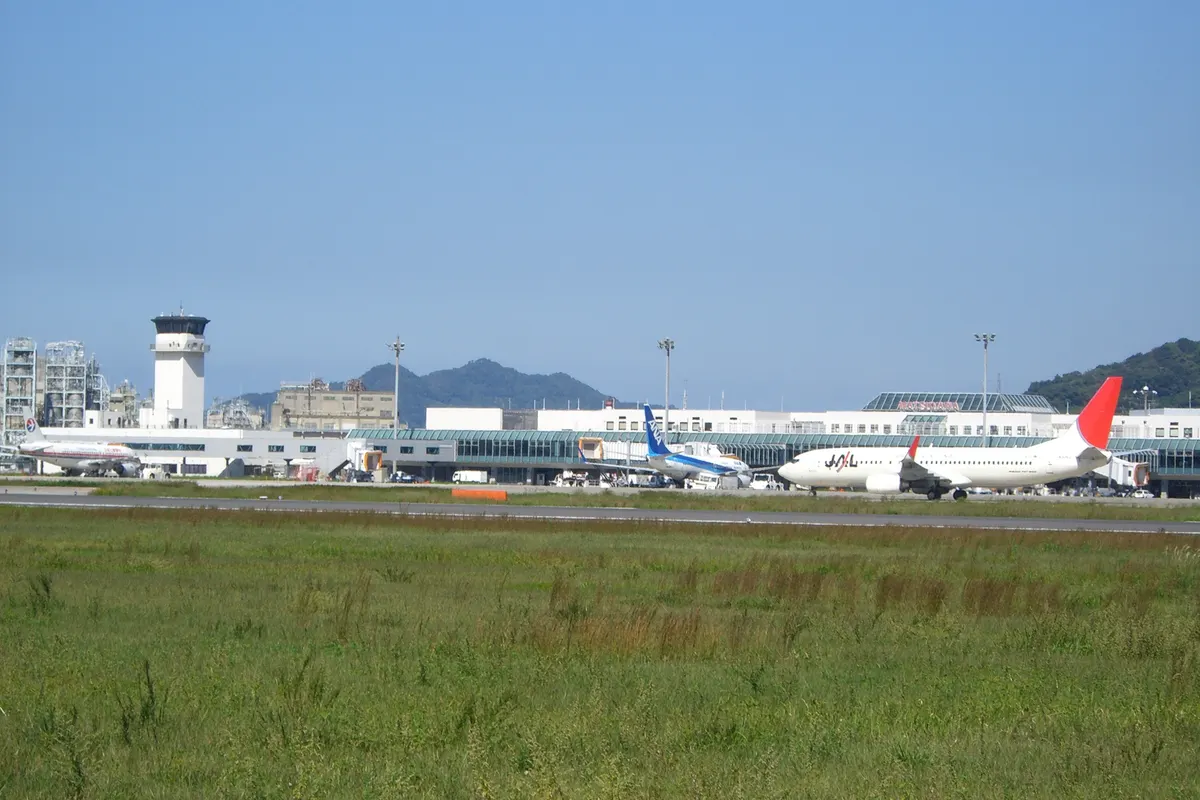
- Rental car counters at Matsuyama Airport are near the east exit, 1st floor. All 7 companies on the airport page have English pages.
- From September 1, 2026, the speed limit on ordinary roads without speed signs is 30 km/h without a center line or similar, 60 km/h with one.
- Call 110 for accidents, 119 for fire and ambulance. JNTO's 24-hour hotline works in English, Chinese and Korean.
- For goods bought on or after November 1, 2026, tax-free shopping changes to a refund after a check at the airport or seaport when you leave Japan.
The steps, and how to use this article
This article splits what you need to prepare for a rental car trip in Ehime into 7 steps, in order from before you leave home to during your trip. Each section gives only the key points and links to other articles on this site for the details. The content was checked on official pages on October 17, 2026.
| Step | When | What to decide or know | Detailed articles |
|---|---|---|---|
| 1 | Before you leave home | Get a license that lets you drive in Japan | Driving with a foreign license |
| 2 | Before you leave home | Book a rental car. Check English support and business hours | 9 rental car companies at Matsuyama Airport, What to know before renting |
| 3 | Before you drive | Japanese road rules, and places in Ehime to be careful | Japanese road rules, Trams, Passing bicycles, Mountain roads in winter |
| 4 | Before you drive | Expressways, ETC, tolls, fuel and EVs | ETC and toll gates, Toll roads, Shimanami Kaido tolls, Self-service gas, EV charging |
| 5 | During your trip | Who to contact for accidents, breakdowns, illness and disasters | Contacts for accidents and breakdowns, Places with English information |
| 6 | When you arrive at the airport | Cash, currency exchange, Wi-Fi, SIM cards, tax-free shopping | Section 6 of this article |
| 7 | When you choose where to go | Information for visitors from abroad at each destination, and model courses | Section 7 of this article |
1. Before you leave home, get a license that lets you drive in Japan
The National Police Agency page says this about the license you need to drive in Japan.
■日本で運転するためには、次のいずれかの免許証を所持している必要があります。(道路交通法第64条、同法第107条の2)
Translation: “■To drive in Japan, you need to hold one of the following licenses. (Road Traffic Act, Article 64 and Article 107-2)”
The same page lists these 3:
- A Japanese driver’s license
- An International Driving Permit based on the Geneva Convention
- A license from Switzerland, Germany, France, Belgium, Monaco or Taiwan, with a Japanese translation made by a designated person or organization
Only International Driving Permits in the form of the 1949 Geneva Convention can be used. The JAF page says this about permits under other conventions.
上記以外の条約(1968年ウィーン条約等)にもとづく国際免許証による運転は認められていませんのでご注意ください。
Translation: “Please note that driving with an international license based on any other convention (such as the 1968 Vienna Convention) is not allowed.”
According to the National Police Agency page, you can drive for 1 year from the day you landed in Japan, or until your license expires, whichever is shorter. The same page has this note about how long an International Driving Permit is valid.
※1 国際運転免許証の有効期間は発給の日から1年間
Translation: “※1 An International Driving Permit is valid for 1 year from the date of issue.”
If your license is from one of the 6 countries and regions that use a translation, note that you cannot apply for a JAF translation from outside Japan. The JAF English page says:
We apologize for the inconvenience, but translations from JAF cannot be requested from outside Japan.
The same page explains how to have someone you know in Japan apply for you, and how to apply online after you arrive in Japan.
If you enter Japan through an automated gate at the airport and there is no stamp in your passport, the date you landed cannot be checked, and some companies will not rent you a car. Organizations that can make translations, how to show the date you landed, and what each of the 7 companies at Matsuyama Airport asks for are in Driving a rental car in Ehime as a visitor from abroad. There is also an English leaflet from the National Police Agency and the prefectural police, “To all foreigners driving in Japan” (PDF).
2. Renting a car: the counters at Matsuyama Airport, and English support
The Matsuyama Airport rental car page explains where the counters are.
レンタカー受付カウンターは、ターミナルビル1階の東側出口付近にあります。 到着のお客様は、手荷物受取所を出て右手側にあります。
Translation: “The rental car counters are near the east exit on the 1st floor of the terminal building. For arriving passengers, they are on the right after you leave the baggage claim area.”
The airport page lists 7 rental car companies. Every company has English pages. The only one that wrote whether staff at the shop speak English was Heisei Car Rentals. The Heisei Car Rentals English page says this about the Matsuyama Airport shop.
English / Korean Staff who can speak the above languages are available (except on days off)
Before you book, check these points:
- Whether you can rent with your license (in some cases, companies describe the countries covered by translations differently)
- Whether the shop is open at the time you arrive. Toyota, Nippon, ORIX and Budget are open until 20:00, Times Car until 19:00, and Heisei Car Rentals until 18:00. Nissan Rent a Car is unstaffed and open 24 hours
- Heisei Car Rentals’ opening time is 8:00 on its Japanese shop page and 9:00 on its English page. The pages differ
- Whether you can rent winter tires, chains, child seats and an ETC card
- The fuel rule when you return the car (at all 7 companies, the basic rule is that you pay for fuel if you do not return the car with a full tank)
Differences between the companies are in 9 Rental Car Companies at Matsuyama Airport and What to know before renting a car at Matsuyama Airport. For the day you return the car, see Before you return a rental car at Matsuyama Airport.
The numbers match the list below and are not a driving order. Tap a number on the map, or "Navigate in Google Maps" in the list, to start directions to that place.
Point locations: © OpenStreetMap contributors (ODbL), GSI place name search
- Matsuyama Airport Passenger Terminal (松山空港 旅客ターミナルビル): The rental car counters are near the east exit on the 1st floor. The foreign currency exchange machine is in the 1st floor lobby, the SIM card vending machine is on the 1st floor, and the information center is on the 1st floor (Matsuyama Airport official pages).Navigate in Google Maps
3. Japanese road rules, and places in Ehime to be careful
Rules to know if you are driving in Japan for the first time
Cars drive on the left side of the road. Stop at red lights, and make a full stop at “止まれ” (stop) signs and at railroad crossings. Drunk driving, and holding a mobile phone to talk while driving, are prohibited. The legal text and the National Police Agency’s English materials are in Japanese Road Rules.
The speed limit on ordinary roads without speed signs changed on September 1, 2026. The National Police Agency page says:
法定速度が60km/hから30km/hに引き下げられる道路は、主に地域住民の日常生活に利用されるような、中央線等がない道路(=生活道路)です。
Translation: “The roads where the legal speed limit is lowered from 60 km/h to 30 km/h are roads without a center line or similar markings, mainly used by local residents in their daily lives (= residential roads).”
今回の改正ですべての道路の法定速度が30km/hになるわけではありません。次のような道路の法定速度は、引き続き60km/hです。
Translation: “This change does not make the legal speed limit 30 km/h on all roads. The legal speed limit on the following roads remains 60 km/h.”
The same page lists ordinary roads with a center line or traffic lanes, ordinary roads where the two directions are separated by a median strip or similar, and motorways, among others. On roads where a sign sets the speed, the speed on the sign comes first.
Roads shared with trams in Matsuyama
In central Matsuyama, some roads have tram tracks running along the roadway. Article 21 of the Road Traffic Act sets these rules for driving on the tracks (the track area).
車両(トロリーバスを除く。以下この条及び次条第一項において同じ。)は、左折し、右折し、横断し、若しくは転回するため軌道敷を横切る場合又は危険防止のためやむを得ない場合を除き、軌道敷内を通行してはならない。
Translation: “Vehicles (excluding trolleybuses; the same applies in this article and in paragraph 1 of the next article) must not drive within the track area, except when crossing the track area to turn left, turn right, cross, or make a U-turn, or when it is unavoidable to prevent danger.”
Waiting behind a stopped tram, and what to check when you turn right, are covered in Rules for Driving on the Same Road as Trams in Matsuyama.
Passing bicycles
From April 1, 2026, the Road Traffic Act has a rule that when you pass on the right side of a bicycle, you drive at a safe speed for the space between you. The National Police Agency’s guidelines and the paths on the bridges are in Rules for Passing Bicycles by Car, and Bicycles on the Shimanami Kaido. Points the Ehime Prefectural Police ask drivers to watch for at intersections in the prefecture are in What the Ehime Prefectural Police ask drivers to watch for on Ehime roads.
Mountain roads that close in winter and at night
For the Ishizuchi Skyline (石鎚スカイライン) near Mt. Ishizuchi, the gate time table on the Ehime Prefecture page gives December 1 to March 31 of the next year as the winter closure period. The road is also closed at night all year round, and the same page has this warning.
閉門時刻までに関門(面河)ゲートから出ないと翌朝の開門時刻まで出られなくなりますので、時間に余裕をもって通行してください。
Translation: “If you do not leave through the Kanmon (Omogo) gate by the closing time, you cannot leave until the gate opens the next morning, so please allow plenty of time.”
Other roads that close in winter, such as the Shikoku Karst, and the rules for winter tires are in Before Driving Ehime’s Mountain Roads in Winter. Equipment for your rental car is in What to Prepare Before Driving Ehime’s Mountain Roads in Winter. Roads that close in heavy rain and typhoons are in Roads in Ehime That Close in Heavy Rain and Typhoons.
4. Expressways, ETC, tolls, fuel and EVs
Toll gates and ETC cards
Expressway toll gates have “ETC専用” (ETC-only), “ETC/一般” (ETC/General) and “一般” (General) lanes. If you pay in cash or by credit card, use a “一般” (General) lane. Whether you can rent an ETC card depends on the rental car company.
Ehime has toll gates that only cars with ETC can use. The NEXCO West Japan page says this about entering one without a card.
ETCが使えない状態(ETC車載器未設置、ETCカード未挿入等)で誤ってETC専用料金所をご利用された場合は後退せずに、「ETC/サポート」又は「サポート」と表示されたレーンにお進みいただき、一旦停止してインターホン等による係員の指示に従ってください。
Translation: “If you use an ETC-only toll gate by mistake when ETC cannot be used (no ETC unit installed, no ETC card inserted, etc.), do not back up. Go to a lane marked ‘ETC/サポート’ (ETC/Support) or ‘サポート’ (Support), stop, and follow the instructions of the staff through the intercom or other means.”
Where the ETC-only toll gates in the prefecture are, and how to go through the lanes, are in Before you drive Ehime’s expressways in a rental car.
The expressway pass for visitors from abroad (SEP)
In the area that includes Shikoku, you can use NEXCO West Japan’s “San’in-Setouchi-Shikoku Expressway Pass (SEP)”. The SEP page says:
This pass is limited to rental cars for foreigners.
The price is separate from the rental car fee, from 10,700 yen for 3 days to 17,700 yen for 10 days. The Honshi Expressway is not covered. The page says:
Using SEP, you can use all expressways in San’in/Setouchi/Shikoku for a fixed price. (Does not apply to Honshi Expressway/urban expressways, etc.)
The Shimanami Kaido (Nishiseto Expressway) is a Honshi Expressway road, so you pay its tolls separately. Who can use the SEP, how to apply, and the shops at Matsuyama Airport that handle it are in the ETC and toll gates article.
Toll roads, and Shimanami Kaido tolls
Ehime also has free motorways built by the national and prefectural governments. Which sections charge tolls is in Toll Roads and Free Roads in Ehime. Tolls between ICs on the Shimanami Kaido and ETC discounts are in Tolls on the Shimanami Kaido (Nishiseto Expressway).
Self-service gas stations, and EV charging
At self-service gas stations, you fill the tank yourself. The ENEOS refueling page asks you to do this before refueling.
体にたまっている静電気を逃すため、必ず「静電気除去シート」に触れてください。
Translation: “To release the static electricity built up in your body, be sure to touch the ‘static electricity removal sheet.’”
Fuel color codes, turning off the engine while refueling, and putting in diesel by mistake are in Self-service gas stations in Japan. Rules for renting an electric vehicle and where the rapid chargers are are in Driving an electric vehicle (EV) in Ehime.
5. If something goes wrong: accidents, breakdowns, illness and disasters
Call 110 for accidents, 119 for fire and ambulance
For traffic accidents, call 110. For fire and ambulance, call 119. The Ehime Prefectural Police page gives example phrases in English and Japanese for a 110 call. The first 2 lines are:
I am a foreigner. I do not speak Japanese.
What the driver does after an accident, foreign language interpreting on 119 calls, how to get to safety when you stop on an expressway, and contacting the company you rented the car from are in What to do and who to contact if you have an accident, a breakdown, or a road problem in Ehime.
24-hour multilingual phone line (Japan Visitor Hotline)
The JNTO (Japan National Tourism Organization) page describes the phone line for travelers like this.
Japan National Tourism Organization (JNTO) operates a visitor hotline 24 hours a day, 365 days a year. Call for tourist information or assistance in the case of accidents and emergencies. Support is available in English, Chinese and Korean.
The number is 050-3816-2787, or +81-50-3816-2787 from outside Japan.
Finding a hospital
On JNTO’s “Guide for when you are feeling ill”, you can choose Ehime as the area and search for medical institutions by language and department. The same page has this note.
- When possible, please contact each medical institution before visiting.
The phone advice line (#7119) for when you are suddenly ill and not sure whether to call an ambulance is in the article on contacts for accidents and breakdowns.
Alerts for earthquakes, tsunamis and heavy rain
The Japan Tourism Agency’s app “Safety tips” sends alerts for earthquakes, tsunamis and more in foreign languages. The app description page says:
This push-enabled app pushes alerts about earthquake early warnings, tsunami warnings, and other weather warnings within Japan in English, Japanese, Hangul, Traditional Chinese, Simplified Chinese, Vietnamese, Spanish, Portuguese, Thai, Indonesian, Tagalog, Nepali, Khmer, Burmese, and Mongolian.
The Safety tips site says that some places to stay take in evacuated people during a disaster, and asks you to check with your accommodation:
Some hotels or Japanese inns are designated to accept evacuated residents during a disaster. Please confirm with your accommodation.
Places to ask about directions and sightseeing in English
The Matsuyama Airport information center is on the 1st floor. The airport page gives its hours as 8:30 to 19:30. The “For visitors from abroad” page says:
館内でお困りごとがございましたら、総合案内所までお越しください。
Translation: “If you have any trouble in the building, please come to the information center.”
Where the tourist information centers near your destinations are, and their English support, are in English information for visitors to Ehime.
6. Money and mobile data: cash, currency exchange, Wi-Fi, SIM cards, tax-free shopping
Carry cash
The “Useful Information” page of Visit Ehime Japan, the prefecture’s English tourism site, recommends carrying cash when you travel around the prefecture. In short, the page explains that cards and electronic payment are widely accepted in larger towns such as Matsuyama, but some small shops in rural areas take cash only, and that ATMs which accept cards issued abroad are found in the center of many towns but are few outside urban areas.
Some destinations also have castles where admission is cash only, shoe lockers that need a 100-yen coin, and parking pay machines that do not accept some bills, such as 10,000-yen bills. Examples are in the tables of the article linked in section 7.
Currency exchange machine and ATMs at Matsuyama Airport
The foreign currency exchange machine at Matsuyama Airport is in the 1st floor lobby and is open 6:00 to 21:00 (365 days a year). It changes foreign banknotes into Japanese yen. It does not take coins. It covers 12 currencies, including US dollars, euros, Chinese yuan, Korean won and Taiwan dollars. The page says:
ご利用にあたっては、ご本人名義のパスポートが必要になりますので、必ずご持参ください。
Translation: “You need a passport in your own name to use it, so be sure to bring it.”
ご利用はお1人さま1週間10万円相当額までとさせていただきます。
Translation: “Use is limited to the equivalent of 100,000 yen per person per week.”
The airport ATM page says:
ATMは、国内線1階到着ロビーにあります。
Translation: “The ATMs are in the domestic arrivals lobby on the 1st floor.”
There is a shared ATM of Iyo Bank, Ehime Bank and Ehime Shinkin Bank, plus Seven Bank and AEON Bank. This page does not say whether cards issued abroad can be used.
Free Wi-Fi, SIM cards and Wi-Fi routers
Free Wi-Fi is available in the Matsuyama Airport Passenger Terminal. According to the free Wi-Fi page, the network name (SSID) is “Matsuyama_Airport_Free_Wi-Fi” or “MYJ-FREE-Wi-Fi”.
There is a SIM card vending machine on the 1st floor.
訪日外国人観光客向けの日本国内利用専用のSIMカード自販機です。
Translation: “This is a vending machine for SIM cards for foreign visitors to Japan, for use in Japan only.”
支払方法はクレジットカードかSuica等の各種交通系ICカードのみ対応しています。
Translation: “Payment is by credit card or transport IC cards such as Suica only.”
| Period | Data | Price |
|---|---|---|
| 3 days | 5GB (eSIM also available) | 2,800 yen |
| 5 days | 10GB (eSIM also available) | 3,600 yen |
| 8 days | 30GB | 4,500 yen |
| 16 days | 30GB | 5,500 yen |
The credit cards accepted are VISA and mastercard. If you want to rent a Wi-Fi router, the airport Wi-FiBOX page says:
国際線到着ロビーにWi-Fiモバイルルーターの自動貸出機を設置しています。
Translation: “There is an automatic rental machine for mobile Wi-Fi routers in the international arrivals lobby.”
Visit Ehime Japan says “Ehime Free Wi-Fi” can be used at many of the main sights in the prefecture. The same page recommends a SIM card or a Wi-Fi router if you want to stay connected. Holding a smartphone in your hand to look at it while driving is prohibited, so set your destination before you leave, or ask a passenger.
Prayer room at Matsuyama Airport
The Matsuyama Airport prayer room page says:
国際線ターミナルビル2階に祈祷室を設置しております。この祈祷室は男女別室となっており、室内には礼拝前に身体を清めるための清浄施設を設置しておりますので、安心してご利用いただけます。ご利用にあたり、ご予約やお申し込みは必要ありません。
Translation: “There is a prayer room on the 2nd floor of the international terminal building. There are separate rooms for men and women, and the rooms have washing facilities for cleansing the body before prayer, so you can use them with peace of mind. No reservation or application is needed.”
This page does not say whether it is before or after the security check.
Tax-free changes from November 1, 2026
The consumption tax exemption system changes for goods bought on or after November 1, 2026. The JNTO page says:
For purchases made on or after November 1, 2026, the revised system adopts a “refund method,” under which the consumption tax equivalent is refunded after Customs confirms at departure that the goods are being taken out of Japan.
The Japan Tourism Agency page for travelers gives the deadline for the procedure and the eligible amount.
Within 90 days from the date of purchase, you are required to present your passport at a tax‑free procedure terminal (kiosk terminal or electronic terminal) installed at airports or seaports to complete the inspection.
○ Purchases totaling 5,000 yen or more (tax excluded) per store per day are eligible.
At tax-free shops, you pay the price including tax. After you show your passport at a terminal at the airport or seaport you leave from and the check is done, the consumption tax amount is refunded. Consumables such as food, drinks and cosmetics are not eligible for the refund if you use them up in Japan.
7. Information for visitors from abroad at each destination, and model courses
Payment, Wi-Fi and rules at each destination
For the main destinations, whether cards are accepted, places that take cash only, free Wi-Fi, and rules such as photography or taking off your shoes are in the “For visitors from abroad” tables, area by area, in 20 Sights in Ehime to Visit With Children. Official English pages, English brochures and tourist information centers are in English information for visitors to Ehime.
Travel times from the airport, and model courses
Official travel times and distances from Matsuyama Airport to the main destinations are listed in Quick Reference: Official Travel Times and Distances from Matsuyama Airport. When you plan your trip, you can use these 3 model courses.
| Course | Places |
|---|---|
| Shimanami Kaido and Imabari (2 days, 1 night) | Towel Museum, Imabari Castle, Itoyama Park, Kirosan, Murakami Kaizoku Museum, Oyamazumi Shrine |
| Nanyo (2 days, 1 night) | Uchiko, Ozu, Unomachi, Uwajima, Yusu Mizugaura Terraced Fields |
| Foot of Mt. Ishizuchi and Saijo (day trip) | Ishizuchi Tozan Ropeway, Ishizuchi Shrine, Railway History Park, Science Museum |
Towns to stay in, and public parking near your accommodation, are in Before Choosing Where to Stay on a Driving Trip in Ehime.
Not stated in the listed sources
- Whether cards issued abroad can be used at the Matsuyama Airport ATMs. The airport page does not say
- An official list of tax-free shops in Ehime. The JNTO and Japan Tourism Agency pages do not have one
- Among the 7 companies at Matsuyama Airport, whether staff who speak English work at the shops other than Heisei Car Rentals. The Matsuyama Airport shop pages of each company do not say
- Whether the Matsuyama Airport prayer room is before or after the security check
About this article
This article sums up what was checked on October 17, 2026, on the official pages of the National Police Agency, JAF, Ehime Prefecture, the Ehime Prefectural Police, NEXCO West Japan, JNTO, the Japan Tourism Agency, Matsuyama Airport and each rental car company, together with the key points of articles on this site. Fees, business hours and systems may change. Before you set out, check the sources of each article and the official pages.
Sources
- 外国の運転免許をお持ちの方|警察庁Webサイト (retrieved October 17, 2026)
- 海外の運転免許証をお持ちのかたが日本で運転する方法 / 日本の免許証をお持ちの方が台湾で運転する方法 | JAF (retrieved October 17, 2026)
- To customers currently overseas | JAF (retrieved October 17, 2026)
- (To all foreigners driving in Japan、PDF、警察庁・都道府県警察) (retrieved October 17, 2026)
- レンタカー|交通アクセス|松山空港 (retrieved October 17, 2026)
- Car rental at Ehime Matsuyama Airport | Heisei Car Rentals (retrieved October 17, 2026)
- 松山空港店|平成レンタカー (retrieved October 17, 2026)
- 生活道路における自動車の法定速度が引き下げられます!!|警察庁Webサイト (retrieved October 17, 2026)
- e-Gov 法令検索 (retrieved October 17, 2026)
- 石鎚スカイラインについて - 愛媛県庁公式ホームページ(久万高原土木事務所) (retrieved October 17, 2026)
- ETC専用料金所のご案内 | NEXCO西日本 (retrieved October 17, 2026)
- San'in-Setouchi-Shikoku Expressway Pass(SEP)- West Nippon Expressway Company Limited. (retrieved October 17, 2026)
- セルフサービスステーション給油方法|サービスステーション|ENEOS (retrieved October 17, 2026)
- 愛媛県警察 / 外国人の方が犯罪に遭われたときは・・・ (retrieved October 17, 2026)
- Japan Visitor Hotline | Travel Japan | JNTO (retrieved October 17, 2026)
- For safe travels in Japan - Guide for when you are feeling ill | Japan : the Official Guide (retrieved October 17, 2026)
- Safety tips for travelers (retrieved October 17, 2026)
- Safety tips for travelers (retrieved October 17, 2026)
- 総合案内所|施設・サービス|松山空港 (retrieved October 17, 2026)
- 海外からのお客様|施設・サービス|松山空港 (retrieved October 17, 2026)
- Useful Information | Visit Ehime Japan (retrieved October 17, 2026)
- 外貨自動両替機|施設・サービス|松山空港 (retrieved October 17, 2026)
- ATM|施設・サービス|松山空港 (retrieved October 17, 2026)
- 無料Wi-Fi|施設・サービス|松山空港 (retrieved October 17, 2026)
- SIMカード自動販売機|施設・サービス|松山空港 (retrieved October 17, 2026)
- Wi-FiBOX|施設・サービス|松山空港 (retrieved October 17, 2026)
- 祈祷室|施設・サービス|松山空港 (retrieved October 17, 2026)
- Japan's Tax Exemption | Travel Japan | JNTO (retrieved October 17, 2026)
- 旅行者向け特設ページ(英語版)|消費税免税店サイト (retrieved October 17, 2026)
Related articles
- Driving a rental car in Ehime as a visitor from abroad: International Driving Permits, foreign licenses with a Japanese translation, and how long you can drive
- 9 Rental Car Companies at Matsuyama Airport: Pickup, Business Hours, New Year Holidays, One-Way Rentals, Winter Tires, Child Seats and ETC Cards
- Driving Rules in Japan for First-Time Drivers from Abroad: Driving on the Left, Red Lights, Stop Signs, Railroad Crossings, Drinking, Mobile Phones, Speed
- Before you drive Ehime's expressways in a rental car: borrowing an ETC card, toll gate lanes, and what to do if you enter an ETC-only entrance
- What to do and who to contact if you have an accident, a breakdown, or a road problem in Ehime: 110, 119, #9910, JAF, and your rental car company
- English information for visitors to Ehime: official English pages, English brochures, and tourist information centers for each destination